Substance metaphysics is the standard model for Western philosophy since Aristotle came up with it (incidentally, he did so in a work entitled Metaphysics, which is how the field was started). It holds that there are simple units underlying the world- that if you boiled something down to its simplest essence, that essence was a single unchanging thing. These qualities, or essences, or substances, were the building blocks of everything in existence, not in the sense that atoms are the building blocks of matter and amino acids are the building blocks of living organisms, but in the sense that they comprise all of the structures in existence. For instance, a bunch of watercolors, a brush and an easel are not a painting, but when they're used in certain ways they establish painting-ness. Where else does that painting-ness come from?
Process metaphysics holds almost the exact opposite view. Reality isn't made of simple timeless units that get grouped together, it's made up of occurrences. A person's day isn't made up of little conceptual objects called "breakfast" and "traffic" and "shower", it's composed of events happening in a sequence. The whole world is just a bunch of people's events overlapping into each-other, and Western philosophy has suffered because it's spent thousands of years looking for the right measurements when there aren't any to begin with.
In a sense, games are a silent battleground between these competing views. Many games are inseparable from the act of playing them, which is a process, but they also exist as a combination of certain parts- like a book, a game's ruleset is just a collection of symbols which can be written, typed, painted, or translated into the appropriate symbols of another language. In other words, games and other media are patterns, but from those patterns emerge an active, eventful experience that isn't some timeless sum of its parts. (At this point there might be a chance to reconcile the two views, or just ignore their differences out of willful postmodernism, but let's assume that they're both necessarily incompatible.)
Making a game that can teach about this divide means making one that's split down the middle in some way, but how that split comes about depends on the number of players. For a multiplayer game players can already be grouped into teams and given team-based abilities and goals, making it simple to create a Substance Team and a Process Team. Of course, no one would find those names very appealing, but that can be skinned over- let's call them, say, the Church of Universal Taxonomy and the Empire of Being.
Now, the Church is our substance-believer bunch, and the Empire is nothing but process-people. Normally they'd have to debate in ivory towers, but here they're going to settle the matter by fighting to the finish. The Church has a focus on certain resources which they can customize by combining them- if this is an FPS the resources are weapons and ammunition, and if it's an RTS they're units. The Empire, on the other hand, has a big focus on events being brought about by combinations of actions- they'd destroy terrain, change the battlefield and take control of certain resources throughout the game. There would probably be balancing issues at first, but it's definitely a feasible game.
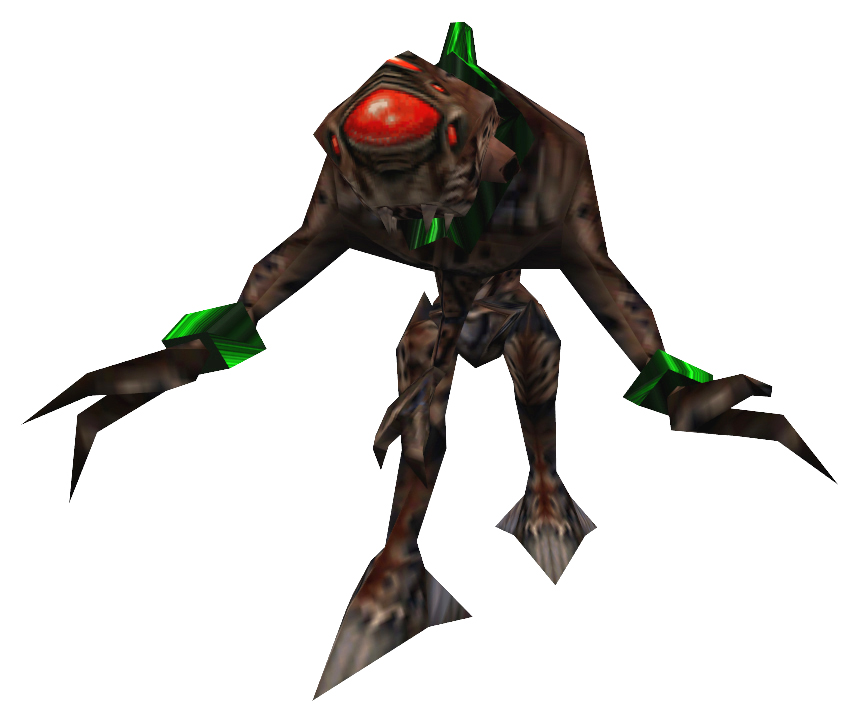
In fact, it already exists, mostly. A multiplayer game named Natural Selection 2 performs most of what I've just described, by having one team of human and one of aliens. Humans have lots of weaponry while aliens deal mostly in melee combat, and humans upgrade their creations while the aliens adapt and evolve, gaining special abilities like wall-walking and teleportation. It's fuzzy, but a having/being or substance/process dichotomy could be hammered out without many changes at all.
Now, if someone went the single-player route instead, they could always play a modified version of the Church-Empire game with an AI on the other side, but that would suggest an immediate right answer. In the multiplayer version it's important that there are human beings playing both sides- it gives the viewpoints expressed by the teams and their mechanics more weight. It would be too easy to label your group as in-the-right if you can see the other team as just being set up as a challenge for you to defeat instead of as another group to compete against.
The easiest way around this is to make the split in the mechanics of the game. A good substance/process single-player game would involve player actions that reflect both of those modes of thought, but in a way that keeps them separate. For example, an old-style point-'n-click adventure game, something that could be made pretty easily with a free outdated piece of adventure-game software and a little skill with pixel art, or at its very skeleton, could be played as a piece of interactive fiction in the style of Zork and Anchorhead.
In either case, the central mechanic is based on the player's perceptions (since, as stated before, metaphysics ties heavily into what we observe): they have two "views", one substance-based and one process-based, and they can switch between the two at will. The substance view offers inventory items, pieces of information, small details that you might otherwise miss and so on, while the process view is where actions are chosen and different outcomes are worked towards. The items you have and use change what you're able to make happen, and vice versa, meaning that the game becomes a cooperative effort between the two ideologies.
A PC game entitled The Cat Lady, like another PC horror adventure game, Trilby's Notes, is most of the way there. There's a dark secondary world hiding behind the regular one, and the player interacts with both of them whether they like it or not, but you have to work between the two to solve puzzles. Little more than a change of theming could make these exactly the games we're looking for, although that would sacrifice at least some of the horror factor and require the stories to be rewritten.
The biggest limit to this is that it's impossible to teach both of them fairly without making them cooperate in some sense. If we agree that one of these is right, then clearly the other is wrong and the real world wouldn't let both of the views coexist. However, by modifying a game to make it match that reality, we have to bias ourselves towards one view or the other, or at the very least make the player choose one at the start and cut the other one out of their experiences. Players may take away more that the views should cooperate than the specific nature of each, and unfortunately that's an amount of noise in the signal that comes with the medium.
Sources:
Cohen, S. Marc. "Aristotle on Substance, Matter and Form" 9 Jul 2002. University of Washington. 28 Sept 2014.
Natural Selection 2 Launch Trailer. Unknown Worlds. 30 Oct 2012. YouTube. 29 Sept 2014.
Seibt, Johanna. "Process Philosophy" 15 Oct 2012. Stanford Encyclopedia of Philosophy. 28 Sept 2014.
The Cat Lady - Teaser Trailer (2012). Mark Lovegrove. 19 Oct 2012. YouTube. 29 Sept 2014.